Driving Starts Before the Road.
SANDI helps neurodiverse learners build driving skills, confidence, and readiness in a safe-to-fail environment — before the pressure and risk of real-world driving.
READINESS
Build readiness before real-world driving begins.
Give learners a controlled place to practice and instructors greater insight into attention, behavior, confidence, and driving performance.
The road is not always the best place to start learning.
For many neurodiverse learners, real-world driving can introduce too much pressure, too quickly. SANDI creates a structured, repeatable environment where learners can practice safely and instructors can observe readiness before transitioning to the road.
Learn without real-world consequences.
Give learners a place to build familiarity with driving situations, repeat challenging scenarios, and make mistakes without the risks of live traffic.
Practice at the learner's pace.
Repeatable driving experiences allow instructors to slow down, revisit situations, and build skills progressively instead of forcing every learner through the same path.
See more than driving performance alone.
SANDI gives instructors additional insight into performance, attention, eye-gaze behavior, confidence, and learner response patterns before real-world driving begins.
From practice to insight.
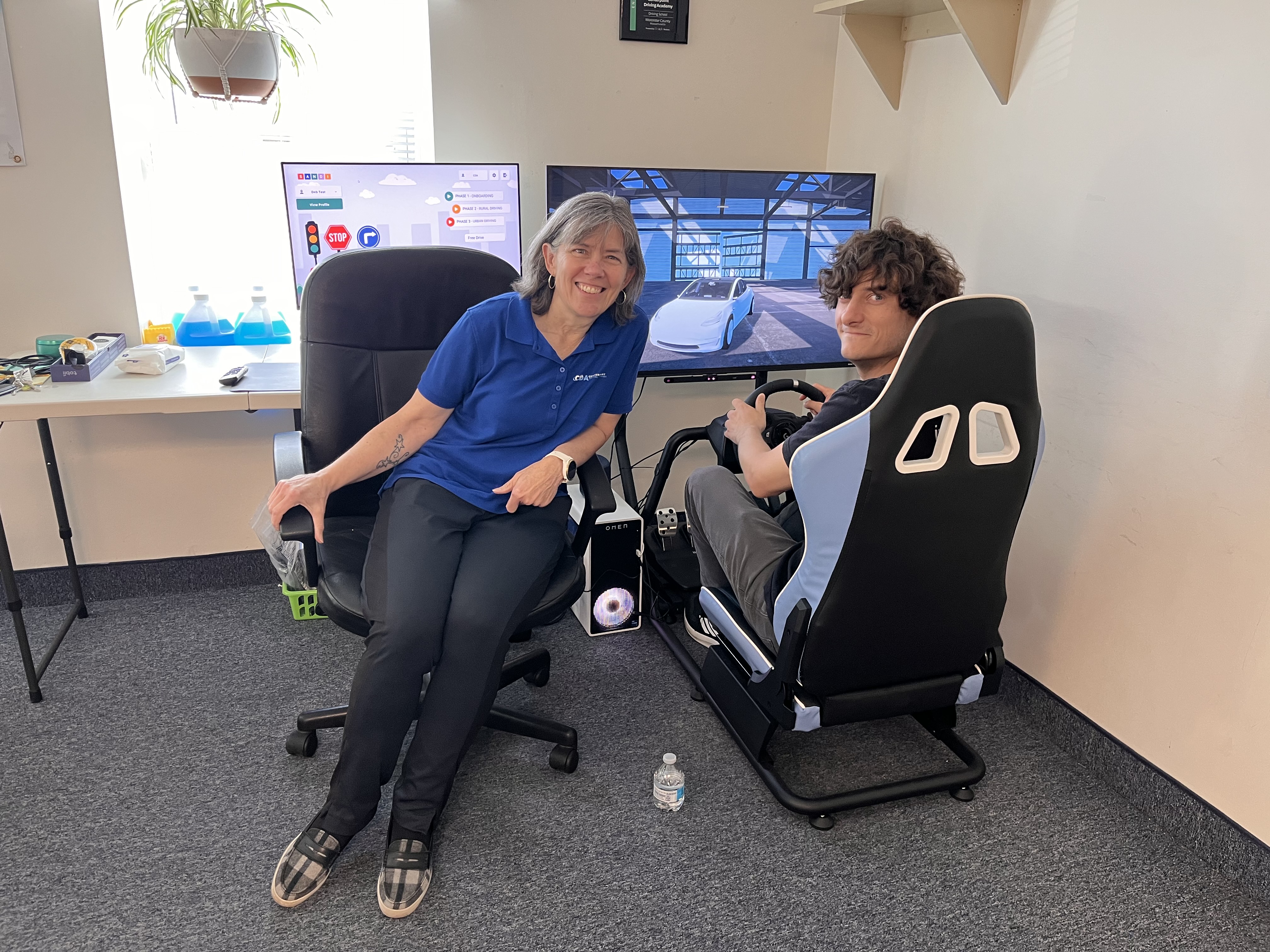
SANDI combines a controlled driving experience for the learner with instructor visibility into performance, attention, and behavior — helping build a clearer picture of readiness before real-world driving begins.
Practice before the pressure is real.
Learners can experience repeatable driving situations, build familiarity with challenging scenarios, and develop confidence before transitioning to live traffic.
See more than whether the drive was completed.
SANDI gives instructors additional insight into driving performance, attention, eye-gaze behavior, and learner response patterns to help guide instruction and readiness.
Built from research. Designed for real-world impact.
SANDI grew from research at Vanderbilt University focused on understanding how technology can support autistic and neurodivergent individuals as they develop driving readiness, confidence, and independence.
University
Research
From university research to a deployable platform.
The technology behind SANDI originated through research at Vanderbilt University and has continued to evolve through research, pilots, instructor feedback, and implementation with organizations serving neurodiverse learners.
Reported reduced driving anxiety
Participants in Vanderbilt research reported reductions in driving-related anxiety following the intervention.
Reported improved attitude toward driving
Research participants reported a more positive attitude toward driving after participating in the program.
Continued toward licensure
A substantial proportion of participants continued pursuing driving and licensure following the research program.
What organizations are seeing beyond the lab.
As SANDI moves from research into community programs, early implementation partners are beginning to report their own learner experience and confidence outcomes.
Participant satisfaction reported in an ASD Drive Ready program evaluation.
Reported an increase in driving confidence in the ASD Drive Ready program evaluation.
Reported they would recommend the program to others.
Different organizations. One shared goal: better driver readiness.
SANDI is designed for organizations that help learners build the confidence, skills, and readiness needed to move toward safer, more independent driving.
Driving Schools
Add a structured readiness step before or alongside behind-the-wheel instruction, especially for learners who may need more preparation before entering live traffic.
Driver Rehab / OT / CDRS
Use repeatable driving scenarios and instructor insights to support assessment, instruction, confidence building, and readiness conversations.
Schools & Transition Programs
Extend transition programming beyond employment and life skills by introducing mobility readiness in a controlled environment.
Autism & Disability Organizations
Add driver readiness as a practical independence service for individuals and families seeking greater mobility and participation in work and community life.
Vocational Rehabilitation
Support mobility as part of employment readiness by helping clients develop confidence and driving readiness before transportation becomes a barrier to opportunity.
No proprietary hardware. No complicated procurement.
SANDI runs on readily available equipment that your organization can purchase directly from Amazon or other major retailers. We provide a clear recommended hardware guide so you know exactly what you need.
Gaming PC
A compatible Windows gaming PC provides the computing power needed to run the SANDI driving environment smoothly.
Two Monitors
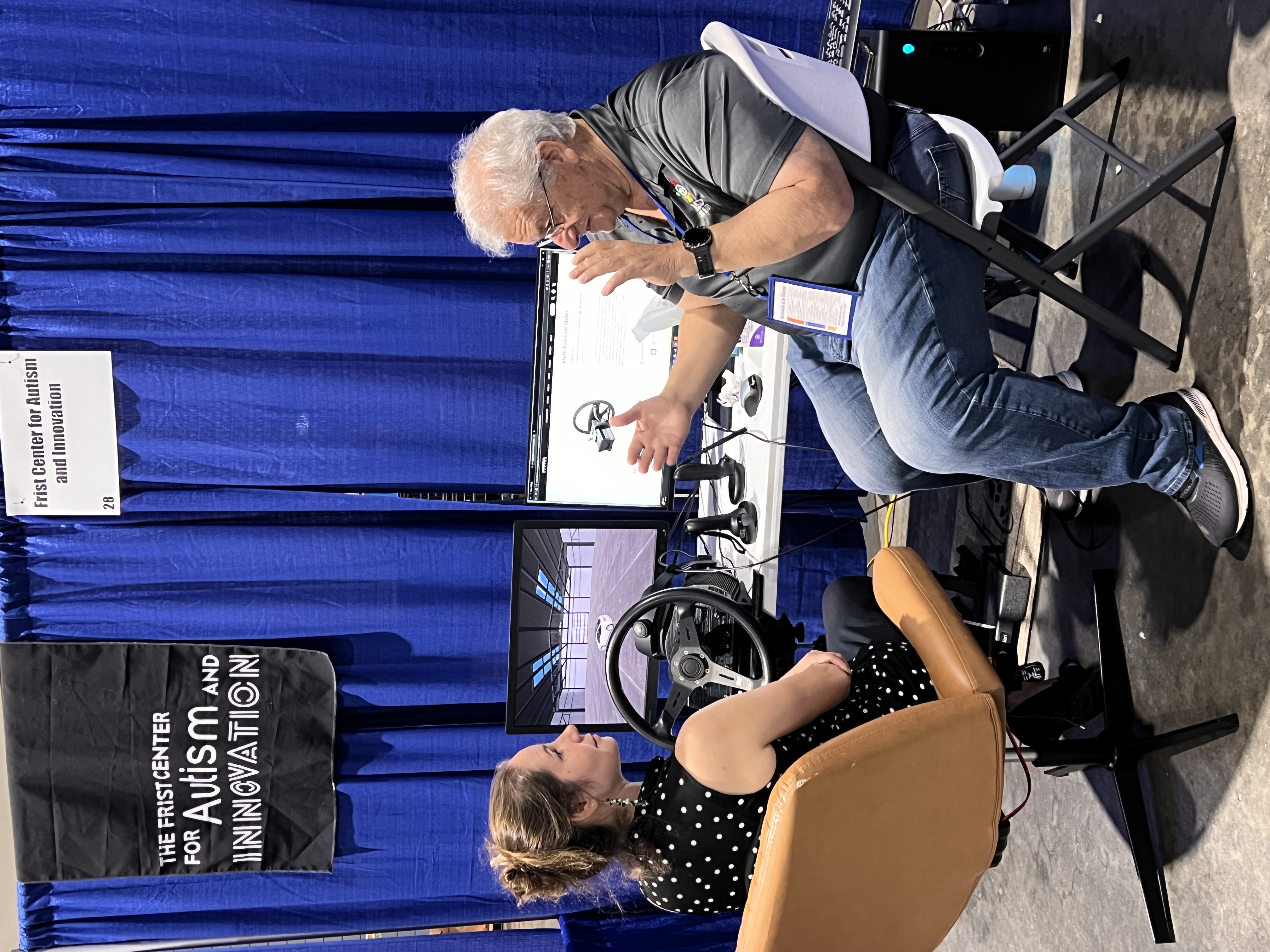
SANDI uses a two-screen setup so the learner can drive while the instructor has a dedicated view of the experience and data.
Wheel, Pedals & Shifter
Standard driving controls create a familiar physical interface for steering, acceleration, braking, and gear selection.
Tobii Eye Tracker
Eye tracking enables SANDI to add another layer of insight into where the learner is looking and how attention is being used.
Simple accessories
A powered USB hub and DisplayPort-to-HDMI cable complete the recommended setup. These are standard, inexpensive accessories available from major retailers.
VR capability
A Meta Quest 3S can be added for organizations that want to use SANDI's optional VR experience. VR is not required for the core setup.
Already have compatible equipment? Great.
You may only need the SANDI software license. Starting from scratch? Follow our recommended hardware list and purchase the components directly from Amazon or other retailers.
One SANDI license. One clear price.
No confusing bundles or required hardware packages from us. Get the SANDI software, purchase the recommended hardware separately, and build the setup that fits your organization.
Driver Readiness Platform
Everything your organization needs to run the SANDI software platform on a compatible hardware setup.
Bring SANDI to your organization.
Start the process today. We'll confirm your organization, setup requirements, and onboarding details before activation.
Questions? Let's make SANDI simple.
From hardware and implementation to who SANDI is designed for, here are answers to some of the most common questions organizations ask us.
Still have a question?
Tell us about your organization and what you want to accomplish with SANDI.

Building the Platform for Independence™
SANDI is part of something bigger.
Neurodiverse Technologies develops evidence-based technologies designed to help neurodiverse individuals build greater independence across important areas of everyday life. SANDI brings that mission to mobility — helping build driver readiness before real-world driving begins.
Driver readiness — building skills, confidence, and preparation for greater mobility and independence.
Interview readiness — helping individuals practice, prepare, and build confidence for employment opportunities.
SANDI Across the U.S.
SANDI is helping organizations and communities across the country build greater driver readiness, confidence, and independence.
Growing with partners across the country.
Driving schools, rehabilitation providers, autism organizations, schools, and community partners are bringing SANDI to the people they serve.










Ready to bring SANDI to your organization?
Whether you're ready to get started or want to see SANDI with your team first, choose the path that works best for you.
Get SANDI
Start your SANDI implementation. We'll confirm your organization, hardware readiness, and onboarding details before activating your software license.
Book a SANDI Demo
See how SANDI works, ask questions about your use case, and talk through hardware, implementation, and how the platform could fit into your existing program.